
- What is lipedema on the arms? A disproportionate increase in fatty tissue that typically affects both arms symmetrically.
- Which areas are affected? More common is the upper arm type or a combination of upper and lower arm. The isolated forearm type is rather rare.
- How do I recognize it? Typical signs are a symmetrical increase in circumference, pain, a feeling of tightness and sensitivity to touch. The pinch test can provide an initial indication.
- How is it diagnosed? The treating doctor assesses the skin surface and carefully examines the tissue by palpation.
- What helps? Compression and physical therapy relieve symptoms. Surgical removal of the diseased fatty tissue via liposuction is the most effective therapy.
What is lipedema on the arms?
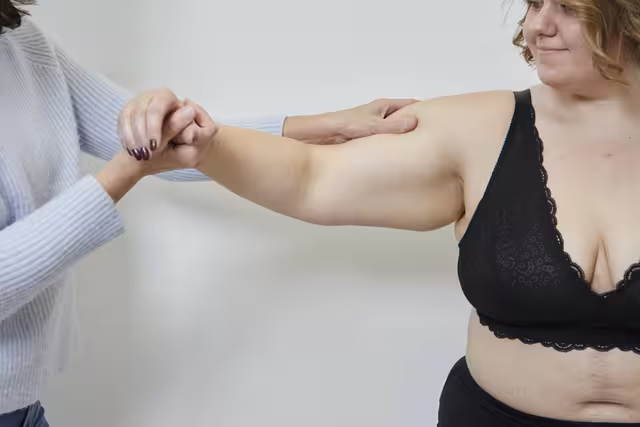
Lipoedema on the arms manifests as a disproportionate increase in fatty tissue that typically affects both arms symmetrically. The hands themselves are usually spared. Almost exclusively women are affected.
Many patients report pain and increased sensitivity in their arms, which can be aggravated by light touch or even the pressure of clothing. This pain can range from a dull, persistent ache to sharp pain that significantly affects everyday comfort and quality of life.
Lipoedema on the upper arm, the forearm, or both?
Lipoedema can occur only on the upper or lower arm, or affect the entire arm. In practice, the isolated forearm type is rather rare. The upper arm type or a combination of upper and lower arm is more common. Lipoedema on the arms often occurs together with lipoedema on the legs.
Possible causes of the condition
The exact causes of lipoedema have not yet been fully clarified, but there are indications that genetic predispositions and hormonal changes play a role. In particular, hormonal changes that often occur during puberty, pregnancy or menopause seem to increase the risk of developing lipoedema.
It is assumed that these hormonal shifts influence fat distribution and storage in the body, thereby promoting the typical lipoedema fat deposits, especially on the arms and legs.
Symptoms: How to recognize lipoedema on the arm
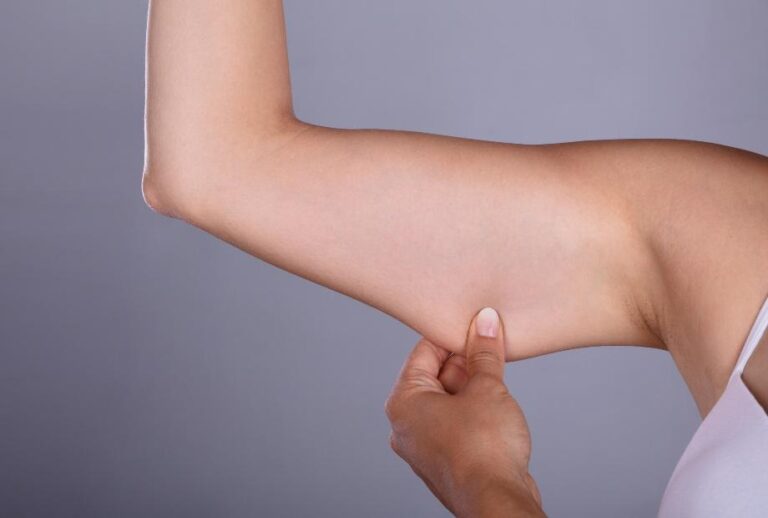
The pinch test is a useful method for detecting lipoedema on the arms. For this test, gently pinch the skin on your upper arms. If this light touch causes unusually severe pain, it may be an indication that lipoedema is present.
Other symptoms of lipoedema on the arms include:
- Increasing symmetrical increase in the circumference of the arms
- Pain and feelings of tension
- Touch sensitivity
- tendency to bruise easily
- Feeling of heaviness and tiredness in the arms
- Orange peel effect (dimples)
Our self-test can also give you an initial indication. Please note, however, that it does not replace a specialist diagnosis.
How is lipoedema diagnosed?
The treating doctor classifies the severity of lipoedema. This assessment is based on an examination of the skin surface and a careful palpation examination.
The texture, firmness and any irregularities of the tissue are recorded in detail. This detailed assessment helps to develop an effective treatment strategy tailored to individual needs.
Treatment approaches for lipedema on the arms
To relieve symptoms and prevent worsening, you can consider the following treatments for lipoedema on the arms:
- Medical compression: Special armbands or compression sleeves prevent swelling of the arms and relieve pain. However, experience has shown that compression of the arms is only necessary in really rare cases.
- Physical therapy: Manual lymphatic drainage and other physical therapy methods can stimulate lymph flow and reduce pain.
- Liposuction: Surgical removal of the abnormal fatty tissue is the most effective therapy. Only through liposuction is it possible to permanently eliminate the cause of lipoedema – the pathological proliferation of fat cells.
Although various treatment options can help relieve symptoms, surgical treatment is the only permanent solution. Arm liposuction can significantly reduce pain, increase mobility and minimize the risk of further lipoedema flare-ups.
This is how important a holistic approach to treatment is
Ideally, liposuction should always be combined with conservative methods such as manual lymphatic drainage, regular exercise and a balanced lipoedema diet to achieve lasting treatment success.
The goal is to enable those affected to live with significantly reduced pain, for which comprehensive advice, treatment and support are crucial. The link between lipoedema and mental health and the treatment of accompanying and secondary conditions should also not be overlooked.
LipoClinic Dr. Heck: We treat your lipedema on the arms
At LipoClinic Dr. Heck, we are proud to be a leader in the diagnosis and treatment of lipoedema on the arms. With our specialized team and state-of-the-art treatment methods, we strive to help every patient relieve the symptoms of lipoedema and return to an active and fulfilling life.
Early detection is key to successful treatment: If you suspect you may have lipoedema, do not hesitate to seek professional help. At LipoClinic Dr. Heck, we are ready to support you on this path and provide you with the best possible care.
Feel free to contact us to find out more about our approach or to exchange ideas with other patients during a LipoTalk.
FAQ – frequently asked questions about lipoedema on the arms
The symptoms are similar: People affected often report sensitivity to pressure, pain and a feeling of heaviness in the arms as well. The classification into lipoedema stages can generally be applied to both body regions. On the arms, however, lipoedema is usually less pronounced or develops later.
The diseased fatty tissue hardly reacts, or does not react at all, to diets and exercise—on the legs as well as, depending on the stage, on the arms. This is an important feature that helps distinguish lipoedema from being overweight.
Your GP or gynecology practice can give you initial indications. However, for a diagnosis that is recognized by the health insurance fund, you must consult doctors in certain specialties (e.g., internal medicine, dermatology or phlebology). Even without billing statutory health insurance, you will receive sound diagnostics and personal advice from experienced lipoedema experts at LipoClinic Dr. Heck.
Early detection and tailored treatment can slow the progression of lipoedema on the arms and are the key to successfully managing this challenge.
On July 17, 2025, the Federal Joint Committee (G-BA) decided that statutory health insurance will cover the costs of liposuction for lipoedema under certain conditions. You can find details in our post on cost coverage by health insurance.
LipoClinic Dr. Heck operates as a specialized private clinic without statutory health insurance accreditation. Therefore, cost coverage by statutory health insurance is not possible with us.

Dr. Thomas Witte is Medical Director of LipoClinic Dr. Heck and a specialist in plastic and aesthetic surgery. With decades of surgical experience and a deep understanding of the individual needs of lipoedema patients, he is one of the leading experts in this field. His focus is on holistic, safe and empathetic care – always with the aim of restoring quality of life.
- AWMF: S2k Guidelines of the German Society of Phlebology and Lymphology
- Frontiers in Cell and Developmental Biology: Lipedema and adipose tissue: current understanding, controversies, and future directions