Pain and tenderness in the legs and arms, a feeling of heaviness that worsens over the course of the day, and bruises without having knocked yourself: symptoms like these can indicate lipoedema.
The condition is often overlooked, even though it profoundly affects the lives of those affected. Here you’ll learn which symptoms are typical, how lipoedema shows up in the legs and arms, and how to recognize the first signs.
What are the typical symptoms? Symmetrical, painful fat deposits on the legs and arms, plus pressure and touch pain, a feeling of heaviness, and a tendency to bruise.
Which parts of the body are affected? Mainly the legs, hips and arms. The hands and feet remain unaffected – an important distinguishing feature from lymphoedema.
What does lipoedema feel like? Symptoms worsen over the course of the day: a feeling of tightness, heavy limbs, and fatigue that goes beyond normal tiredness.
What distinguishes it from being overweight? The fatty tissue barely responds to diet and exercise, and it hurts – that’s not the case with ordinary fat pads.
What are the first signs? Tired legs, a feeling of tightness in trousers or sleeves despite stable weight, and bruises without a knock.
Who makes the diagnosis? Always by a doctor, based on a consultation and physical examination. There is currently no device-based test.
Recognizing lipedema: What is lipedema?
Lipoedema is a symmetrical, disproportionate increase in subcutaneous fatty tissue, mainly on the legs, hips and arms. The hands and feet are usually spared, which is an important distinguishing feature from other conditions.
Unlike general obesity, lipoedema fat cannot be significantly reduced through dieting or exercise. For many people affected, this is an additional burden.
The exact causes are not yet fully understood. Experts suspect a genetic predisposition as well as hormonal influences. Lipoedema often first appears during phases of hormonal change such as puberty, pregnancy or menopause.
Lipedema symptoms at a glance
Symptoms vary and differ from person to person. The most common signs include:
Disproportionate fat distribution: symmetrical fat pads on the legs and arms that don’t match the rest of the body.
Heavy legs: a feeling as if you’re constantly carrying a load.
Tendency to bruise:haematomas develop even after minor knocks.
Pain and a feeling of tightness: both often intensify over the course of the day.
Pressure and touch pain: the affected areas are sensitive to touch.
Fatigue and exhaustion: chronic fatigue that goes beyond normal tiredness.
This also includes the link between lipoedema and mental health: many people affected struggle with shame, withdrawal and reduced self-esteem.
Psychological effects >
Heavy arms >
Pressure pain >
Stabbing pain >
Heavy legs >
Pressure pain >
Stabbing pain >
Proportions don’t match >
Jumps in size >
Bruising >
Proportions don’t match >
Jumps in size >
Bruising >
Click on an area to learn more about the respective symptom.
Lipoedema in the legs and arms: symptoms in focus
Symptoms in the legs
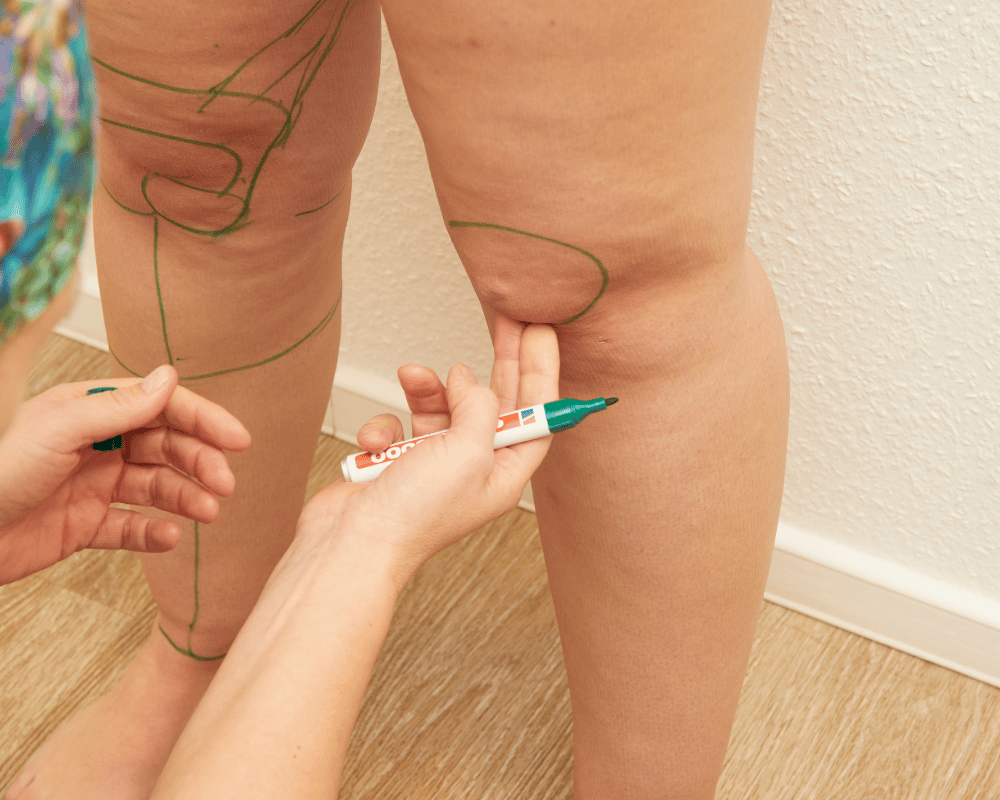
Most often, lipoedema becomes noticeable in the legs. A typical sign is an increase in leg circumference from the ankles up to the hips, often creating the impression of “column legs”.
The skin is sensitive to touch, and many people affected report pain. In addition, the skin on the legs often feels unusually cold and tight. At first, there is often only a pronounced feeling of heaviness.
Symptoms in the arms
An increase in circumference in the legs and arms is one of the classic signs of lipoedema.
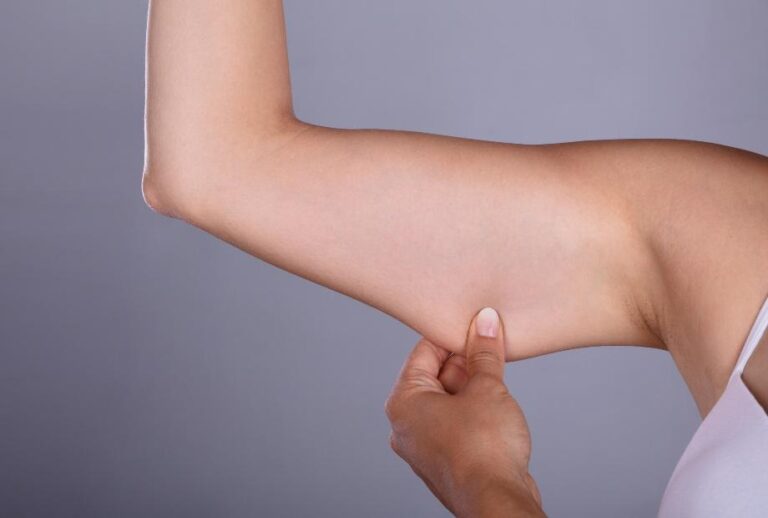
Lipoedema can also develop in the arms, usually from the wrists to the shoulders. The hands themselves are not affected.
The symptoms are similar to those in the legs: increased sensitivity to pressure, pain and a feeling of heaviness.
What about the abdomen?
In the guidelines, lipoedema is described only for the legs, buttocks and arms. However, the lower abdomen can also show similar symptoms, such as pressure pain and a feeling of tightness. With the right indication, liposuction can achieve similarly good results there. The fat distribution disorder itself, however, does not occur on the abdomen.
Pain and fatigue with lipoedema
Particularly distressing is the constant pain that accompanies those affected around the clock. It is penetrating, rarely eases and is almost always present. During a lipoedema flare-up, it intensifies even further: then even light touch becomes unbearable, and freedom of movement can be severely restricted.
In addition, pronounced fatigue often occurs, combined with a deep feeling of heaviness in the affected limbs. This symptom impairs mobility and stamina and significantly reduces quality of life.
Correctly interpreting the first signs of lipoedema
Especially at the beginning, lipoedema is often not recognized or is confused with other conditions. Similar symptoms can be caused, for example, by fibromyalgia, chronic musculoskeletal pain, polyneuropathy or chronic venous insufficiency. Secondary conditions can also make diagnosis more difficult.
These signs suggest lipoedema:
The fat deposits can hardly be influenced by diets or exercise.
Legs and arms are disproportionately large compared to the rest of the body.
Pain and feelings of tightness occur regardless of the time of day.
Bruises occur frequently without you having knocked yourself.
No diagnosis via imaging
For a lipoedema diagnosis, in addition to the symptoms described, a personal physical examination is essential. There is currently no device-based test that can confirm lipoedema. Ultrasound can only provide indications.
Not sure whether your symptoms fit lipoedema? Our self-test with ten questions gives you an initial orientation.
Recognizing lipoedema early is crucial to slow progression and maintain quality of life. Symptoms such as fatigue and pain should be taken seriously and discussed with specialists early on.
LipoClinic Dr. Heck is a world leader in the diagnosis and surgical treatment of lipoedema. Our team treats patients according to a protocol we developed in-house. In a personal consultation, we advise you comprehensively and create a treatment plan that suits you.
Would you like to learn more about our approach or sign up for one of the LipoTalks?
Frequently Asked Questions
FAQ – frequently asked questions about lipoedema symptoms
Lipoedema is often characterized by a symmetrical increase in fat on the legs or arms, while the feet and hands remain unaffected. Typical symptoms are sensitivity to pressure, pain on touch and a feeling of heaviness in the affected limbs. The distribution of fat is usually strikingly disproportionate to the rest of the body.
The first signs often seem non-specific: tired legs, an unpleasant feeling of pressure and an increasing feeling of tightness in trousers or sleeves, even though weight remains stable. A bruise without a knock can also be a sign. Symptoms often begin during phases of hormonal change such as puberty or pregnancy.
Lipoedema usually develops gradually, but often becomes apparent after hormonal upheaval phases such as puberty, pregnancy or the menopause. The symptoms are often more noticeable as they progress.
Yes, pain is a key symptom. It usually presents as pressure pain, a feeling of tightness or burning pain in the affected areas and often increases over the course of the day.
Lipoedema does not affect the hands and feet, whereas lymphoedema does. In addition, lymphoedema often causes elastic swellings, whereas lipoedema tends to cause pressure-painful tissue proliferation without pitting.
No. The diseased fatty tissue barely responds to diet and exercise. Losing weight can ease symptoms somewhat and is beneficial for overall health, but lipoedema itself does not disappear as a result.
Medically reviewed by
Dr. med. Thomas Witte
Medical Director of LipoClinic Dr. Heck
Specialist in plastic and cosmetic surgery
Dr. Thomas Witte is Medical Director of LipoClinic Dr. Heck and a specialist in plastic and aesthetic surgery. With decades of surgical experience and a deep understanding of the individual needs of lipoedema patients, he is one of the leading experts in this field. His focus is on holistic, safe and empathetic care – always with the aim of restoring quality of life.
Lipoedema: What is it? Symptoms, Causes and Diagnosis
Do you feel that your arms and legs are disproportionately large compared to the rest of your body? Do you constantly have heavy legs and feel as though a sack of potatoes is hanging off you? Are the fat deposits tender to the touch and painful? Then lipoedema could be the cause.
As a leading specialist clinic for lipoedema, we at LipoClinic Dr. Heck specialize in clarifying and treating this pathological fat distribution disorder. Below, you can find out more about lipoedema, how to recognise the condition, and which treatment pathways are available to you.
Treating cellulite: What really helps against orange peel skin
Smooth, firm skin is considered the ideal of beauty, but the reality is often different: Almost 90 percent of all women are familiar with the small dents on the thighs, bottom or stomach. Cellulite is not a sign of a lack of fitness or a poor diet, but a natural part of the female body.
Find out here exactly what cellulite is, why it doesn’t have to have anything to do with being overweight, what really helps against the dents and when it is worth considering a medical cause such as lipoedema.
Many women experience it suddenly or gradually over the years: swelling that does not go away. The legs feel heavy, the back of the foot is tight, and sometimes even getting dressed becomes a challenge. Until now, you may have thought it was due to being overweight, too little exercise or simply getting older.
Yet there could be more to it: lymphoedema. Here you will learn what lymphoedema is, how to recognise it, what stages exist and why distinguishing it from lipoedema is so crucial.
Many women with lipoedema report not only pain and feelings of tightness, but also a profound feeling of fatigue. An exhaustion that can’t simply be “slept off”.
Here you can find out what is behind fatigue in lipoedema, which physical and emotional causes come together, and what you can do to boost your energy levels again.
Um Ihnen ein optimales Erlebnis zu bieten, verwenden wir Technologien wie Cookies, um Geräteinformationen zu speichern bzw. darauf zuzugreifen. Wenn Sie diesen Technologien zustimmen, können wir Daten wie das Surfverhalten oder eindeutige IDs auf dieser Website verarbeiten. Wenn Sie Ihre Zustimmung nicht erteilen oder zurückziehen, können bestimmte Merkmale und Funktionen beeinträchtigt werden.
Functional
Always active
Der Zugriff oder die technische Speicherung ist unbedingt für den rechtmäßigen Zweck erforderlich, um die Nutzung eines bestimmten Dienstes zu ermöglichen, der vom Abonnenten oder Nutzer ausdrücklich angefordert wurde, oder für den alleinigen Zweck der Übertragung einer Nachricht über ein elektronisches Kommunikationsnetz.
Preferences
Die technische Speicherung oder der Zugriff ist für den rechtmäßigen Zweck der Speicherung von Voreinstellungen erforderlich, die nicht vom Abonnenten oder Nutzer beantragt wurden.
Statistics
The technical storage or access, which is solely for statistical purposes.Die technische Speicherung oder der Zugriff, der ausschließlich zu anonymen statistischen Zwecken verwendet wird. Ohne eine Aufforderung, die freiwillige Zustimmung Ihres Internetdienstanbieters oder zusätzliche Aufzeichnungen von Dritten können die zu diesem Zweck gespeicherten oder abgerufenen Informationen allein in der Regel nicht zu Ihrer Identifizierung verwendet werden.
Marketing
The technical storage or access is required in order to create user profiles to send advertising, or to track the user on a website or across several websites for similar marketing purposes.
Many patients with lipedema suffer not only from the physical complaints such as pain and swelling, but also from psychological stress such as feelings of shame, depression, lack of understanding from others and reduced self-confidence. In order to ensure sustainable treatment success, it is important that the psychological conditions are also taken into account in the therapy. To ensure a successful outcome for the treatment in the long term, it is important that psychological conditions are also considered in the therapy.
Lipedema patients often experience a heavy and tired feeling in their legs and/or arms due to the pathological accumulation of fatty tissue. This heavy feeling can lead to reduced levels of movement and limit the physical activity of patients.
Pressure pain can occur in lipedema because of the irregular distribution of fatty tissue and inflammation beneath the skin. The increased growth of fat cells places pressure on the surrounding tissue and nerves, which can lead to pain and feelings of tightness.
Stabbing pain in lipedema can occur because of tissue stress, inflammation, nerve irritation or accompanying medical conditions such as venous disorders or lymphedema. Stabbing pain can also occur when resting or sitting/standing for long periods.
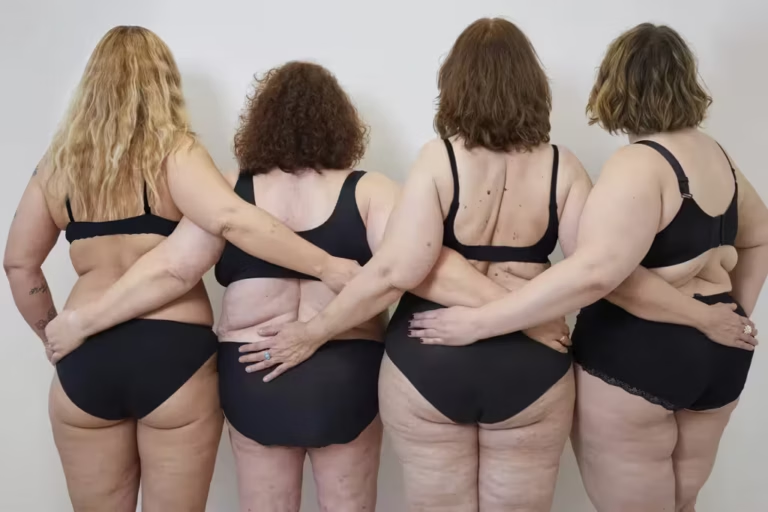
Lipedema patients often have body proportions that do not match the rest of their body. Typically, they have a slender upper body, while their legs and/or arms are significantly enlarged due to symmetrical fat deposits.
A common feature of advanced lipedema are obvious jumps in size with fat deposits forming around the wrists or ankles. This leads to a noticeable difference in the circumference between the arms/legs and the slimmer hands/feet, which creates what are known as ‘fat cuffs’ or ‘bracelets’.
Due to the abnormal fat distribution, patients with lipedema tend to have more permeable capillary walls, which means that tissues can bruise more easily in response to minor injuries or if slight pressure is applied to the affected areas.